

Welcome to the masterclass on portrait lighting fundamentals, proudly brought to you by the editorial and visual arts desk at YOU Magazine. In the dynamic world of contemporary fashion, beauty, and editorial photography, light is your primary brush. Mastering how to manipulate, diffuse, and direct light separates the amateur snapshot from the breathtaking cover image. Whether you are working in a professional studio or experimenting in a rented loft, understanding how to shape light using fundamental modifiers is non-negotiable.
As you explore our comprehensive visual arts essays and practical training modules, remember that lighting is not merely about exposure—it is about mood, dimension, texture, and storytelling. For a deeper dive into camera operations before you set up your strobes, we invite you to experiment with our YOU Magazine Interactive Camera Simulator to test your knowledge of aperture, shutter speed, and ISO.
Core Technical Concepts: The Building Blocks of Studio Lighting
Before rigging studio strobes and large softboxes, you must understand the physics and geometry of light. Every successful portrait setup relies on a few fundamental variables: quality, direction, and the inverse-square law.
1. Quality of Light: Hard vs. Soft
Light quality refers to the transition line between the illuminated side of the subject and the shadow side. A hard light (produced by an un-modified bare bulb, a small reflector, or direct sunlight) creates sharp, well-defined shadows with high contrast. Conversely, a soft light (created by diffusing a studio strobe through a large softbox or umbrella) wraps gracefully around the contours of the face, producing gentle, feather-soft gradient shadows.
2. The Inverse-Square Law
A crucial technical principle for studio photographers is the inverse-square law, which dictates that the intensity of light is inversely proportional to the square of the distance from the source. In simple terms: if you move your light source twice as far away from your subject, the subject receives only one-fourth of the original light intensity. To master this concept in depth, review professional resources such as the Wikipedia Guide on Inverse-Square Law.
3. The Role of Modifiers
Modifiers dictate the spread and softness of your illumination. A large rectangular softbox provides broad, wrapping light reminiscent of north-facing window light, whereas a beauty dish offers a punchier, high-contrast look favored in high-fashion and commercial beauty portfolios. To see how professional lighting translates to high-end editorial work, browse our curated YOU Magazine Fashion & Model Portfolios.
Step-by-Step Practical Techniques: One Light, Rembrandt & Butterfly
Let us break down three essential lighting setups that every portrait and fashion photographer must master. You can explore further technical tutorials across our library via Photography A-Z Educational Guides.
The One-Light Setup (Loop Lighting Foundation)
The single-light setup is the ultimate test of your understanding of shadow and form. By starting with just one studio strobe and a softbox, you learn how placement completely transforms facial topography.
- Placement: Position your light source at a 45-degree angle to the side of your subject and elevated roughly 30 degrees above eye level, pointing downward.
- The Look: This creates a gentle shadow of the nose that points downward and slightly to the side, landing just above the corner of the mouth (known as loop lighting).
- Control: Use a white foam board or collapsible reflector on the shadow side of the face to bounce light back into the shadows, controlling your contrast ratio.
Rembrandt Lighting
Named after the legendary Dutch painter Rembrandt van Rijn, this dramatic lighting pattern is characterized by a distinct inverted triangle of light on the shadowed cheek of the subject.
- Placement: Move your single primary light further around the subject to roughly a 45 to 60-degree angle from the camera axis, elevated higher than the loop lighting setup.
- The Triangle: The key is ensuring that the light catches the eye on the shadow side (creating a catchlight) and forms a small, distinct triangle of illumination bounded by the nose, the shadow of the cheek, and the lower eyelid.
- Mood: Rembrandt lighting adds an air of mystery, drama, and classic fine-art depth, making it a staple in editorial storytelling and emotive portraiture.
Butterfly Lighting (Paramount Lighting)
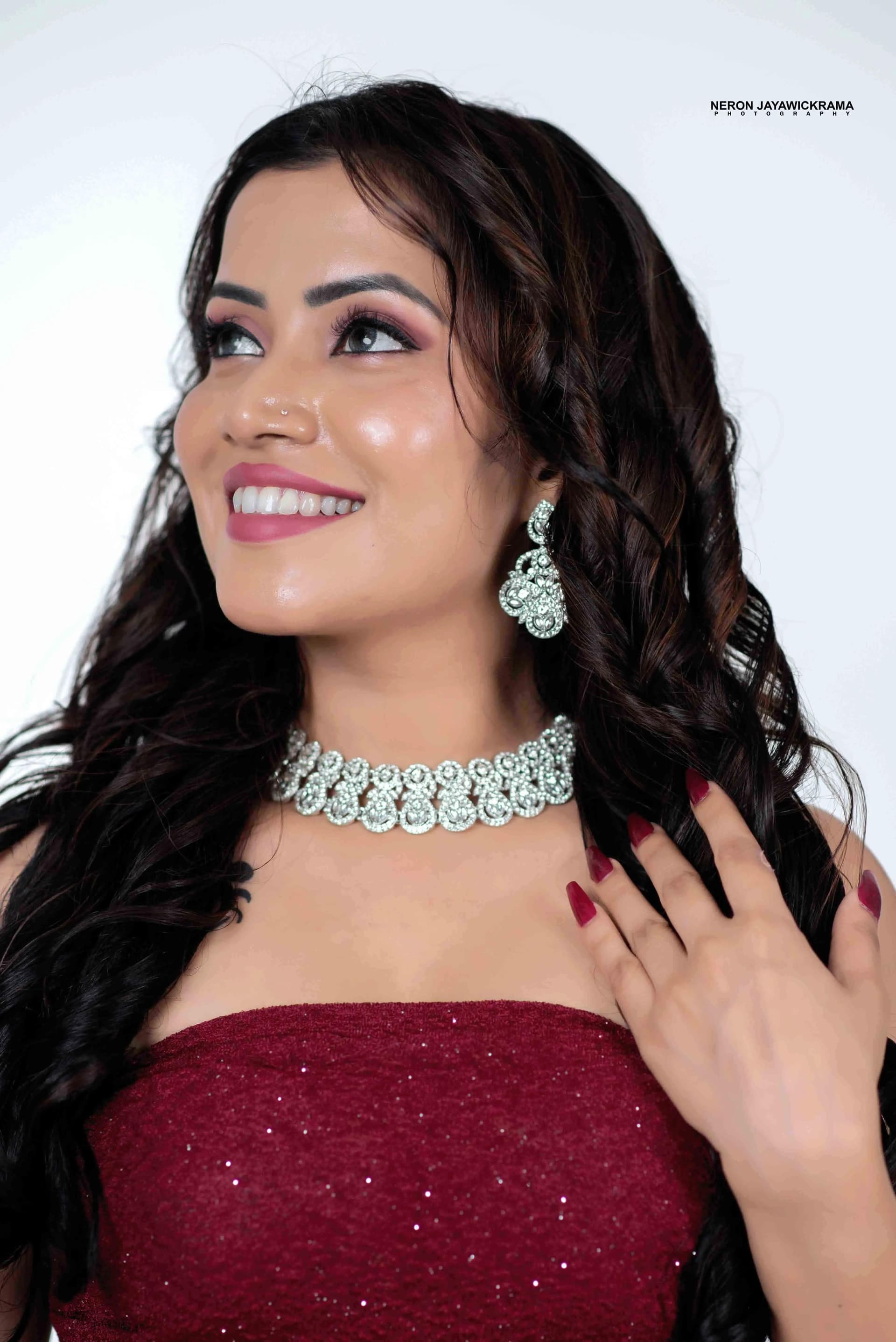
Widely used in classic Hollywood glamour and modern beauty campaigns, butterfly lighting gets its name from the symmetrical, butterfly-shaped shadow created directly beneath the subject's nose.
- Placement: Position your key light directly in front of the subject and elevated high, pointing straight down along the camera lens axis. The subject sits directly underneath the light source.
- The Look: This setup sculpts the cheekbones and slims the jawline while casting a symmetrical butterfly shadow beneath the nose. A reflector placed flat on the subject's lap facing upward fills in under-chin shadows.
- Application: Perfect for beauty shoots, makeup artistry showcases, and glamorous editorial features. For inspiration on how this is utilized in high-end lifestyle coverage, check out our Wedding Highlights & Editorial Features.
Common Mistakes to Avoid
Even seasoned photographers occasionally fall into technical traps. Avoid these common pitfalls to ensure professional-grade results:
- Ignoring Catchlights: Failing to catch a reflection in your subject's eyes makes them look lifeless. Always ensure your softbox or modifier is positioned to create a vibrant sparkle in the pupils.
- Incorrect Light Height: Placing key lights too low results in unflattering upward shadows (often called "horror lighting"). Keep your lights at or above eye level unless purposefully aiming for a dramatic stylistic effect.
- Neglecting Distance to Background: Placing your subject too close to the background wall in a one-light setup means your key light will spill onto the backdrop, killing your contrast and dynamic range.
Pro Tips for Fashion & Portrait Shoots
Elevate your studio workflow with these industry-tested strategies:
- Master Camera Mastery First: Always reference official manufacturer resources like the Canon Learning Center or Nikon Learn & Explore to understand flash sync speeds, metering modes, and wireless trigger systems.
- Work with V-Flats: Invest in reversible black-and-white V-flats. Use the white side to bounce and fill shadows cleanly, or flip to the black side to absorb ambient bounce and deepen contrast on demand.
Direct Your Model's Eyes: In Rembrandt lighting, ensure the subject turns their head slightly toward the key light to maintain the integrity of the shadow triangle.
Conclusion
Lighting is the heartbeat of visual storytelling. By mastering the nuances of the one-light setup, the dramatic mood of Rembrandt lighting, and the polished glamour of butterfly lighting, you unlock limitless creative potential behind the lens. Practice these setups meticulously, experiment with distance and modification, and continue refining your craft with YOU Magazine as your ultimate guide to fashion, lifestyle, and visual arts excellence.
Comments